
Appendix Surgeon in Gota

If sudden abdominal pain has you worried about appendicitis, finding a trusted, experienced surgeon nearby matters. Dr. Jaydeep Maheshwari offers laparoscopic-focused surgical care for appendix-related conditions, with an approach built on careful evaluation, modern technique, and honest communication. Patients in Gota, Jagatpur, and surrounding areas of Ahmedabad can consult him for accurate diagnosis and timely treatment, whether the situation is routine or urgent.
This page explains what appendicitis is, how it’s diagnosed, what laparoscopic appendix surgery involves, what recovery looks like, and why patients across Gota continue to trust him for this kind of care.
What Is Appendicitis?
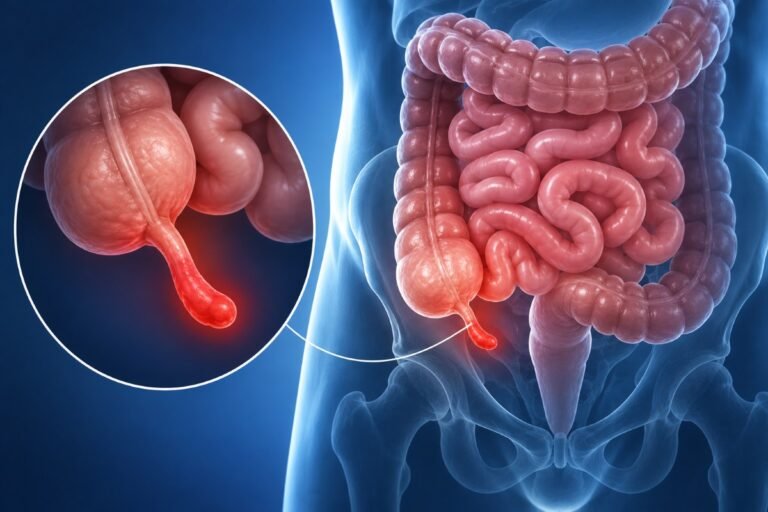
Appendicitis is the inflammation of the appendix, a small pouch attached to the large intestine on the lower right side of the abdomen. When the appendix becomes blocked, often due to trapped stool, swelling, or infection, bacteria can multiply inside it, causing inflammation that tends to worsen quickly rather than settle on its own.
Left untreated, an inflamed appendix can rupture, releasing infection into the abdominal cavity and leading to more serious complications such as peritonitis or abscess formation. Because of this, appendicitis is generally considered a condition that requires prompt medical evaluation rather than a wait-and-watch approach. Age, overall health, and how early the condition is caught all influence how straightforward treatment turns out to be.
+91 - 96018 08681
Signs and Symptoms of Appendicitis
Appendicitis symptoms can develop gradually over a day or two, or appear suddenly. Common signs to watch for include:
Pain that starts near the navel and shifts to the lower right abdomen
Pain that worsens with movement, coughing, walking, or pressure on the area
Nausea or vomiting, often following the onset of pain
Loss of appetite
Low-grade fever that may rise as inflammation progresses
Abdominal swelling, tenderness, or bloating
Constipation or diarrhea in some cases
Not every patient experiences all these symptoms, and presentation can vary by age. If you’re experiencing persistent or worsening abdominal pain, especially on the lower right side, it’s advisable to seek medical evaluation promptly rather than waiting for symptoms to resolve on their own, since delay is one of the main factors that increases the risk of complications.
Why Choose Laparoscopic Appendix Surgery (Appendectomy)
The standard treatment for appendicitis is surgical removal of the appendix, known as an appendectomy. The laparoscopic (keyhole) technique is used wherever clinically suitable, and it offers several advantages over traditional open surgery:
Smaller incisions: Typically just a few small cuts instead of one large incision
Less post-operative pain: Reduced trauma to abdominal tissue means less discomfort during recovery
Faster recovery: Many patients resume light activity sooner than with open surgery
Minimal scarring: Small incisions heal with far less visible scarring over time
Shorter hospital stay: Several cases can be managed as short-stay or day-care procedures
Lower infection risk: Smaller wounds generally reduce the chances of post-surgical infection
Better visualization: The magnified camera view allows precise identification and removal, even in less straightforward cases
That said, suitability for laparoscopic surgery depends on individual diagnosis and clinical findings, including how advanced the appendicitis is and whether there are any complicating factors, which is why every case starts with a proper evaluation before any treatment is recommended.
How the Procedure Works
Understanding the process can ease some of the anxiety around surgery, especially when it needs to happen quickly. A typical laparoscopic appendectomy involves the following steps:
Evaluation: Physical examination, symptom history, and diagnostic tests such as ultrasound or blood work to confirm appendicitis and assess urgency.
Anesthesia: General anesthesia is administered to keep the patient comfortable and pain-free throughout the procedure.
Incisions: A few small incisions, usually half a centimeter to a centimeter each, are made in the abdomen to insert the laparoscope and surgical instruments.
Visualization: The laparoscope transmits a magnified, high-resolution view of the appendix and surrounding area onto a monitor, guiding precise removal.
Removal: The inflamed appendix is carefully detached and removed through one of the small incisions.
Closure: Incisions are closed with sutures or surgical glue, minimizing visible scarring.
- Recovery: Patients are monitored post-surgery and given clear aftercare instructions to support a smooth, uneventful recovery.
Why Patients in Gota Choose This Practice
As a dependable Appendix Surgeon in Gota, Dr. Jaydeep Maheshwari is consulted by patients across the wider Ahmedabad area for appendicitis treatment because the approach is built on consistency and clarity rather than quick fixes. Here’s what patients can expect:
Careful surgical planning: Treatment decisions guided by diagnostic findings and individual patient factors, not assumptions
Standard treatment protocols: Every procedure follows a defined, consistent clinical process
Modern laparoscopic technique: Contemporary methods used wherever clinically appropriate
Clear communication: Your condition and the recommended procedure explained in plain, understandable language, not medical jargon
Ethical practice: Recommendations based on medical necessity, not upselling
Personal attention: Individualized care for every patient, every time
Structured aftercare: Post-procedure guidance so recovery stays on track and concerns are addressed early
Because appendicitis can escalate quickly, having a surgeon nearby who can evaluate and act promptly, without unnecessary delay, makes a meaningful difference in outcomes. This is especially relevant for families in Gota and Jagatpur who want reliable surgical care without having to travel across the city during a medical emergency.
Recovery and Aftercare
Recovery timelines after a laparoscopic appendectomy vary depending on the individual case and how advanced the appendicitis was at the time of surgery. Generally speaking:
Many patients are discharged within 24–48 hours for uncomplicated cases
Light activity, such as walking around the house, can often resume within a few days
Most patients return to normal daily routines within 2 to 4 weeks
Pain is typically mild to moderate in the days following surgery and is managed with prescribed medication
Follow-up visits help confirm the incision is healing properly and that there are no signs of infection or complications
Diet is usually resumed gradually, starting with light, easily digestible foods
Clear, structured aftercare instructions are provided after every procedure, so patients know exactly what to expect during recovery and when to reach out if something feels off, rather than guessing on their own.
Book Your Consultation
If you’re dealing with abdominal pain that could be appendicitis, don’t wait for it to get worse. As a trusted Appendix Surgeon in Gota, Dr. Jaydeep Maheshwari offers prompt evaluation, honest guidance, and safe laparoscopic treatment focused on your comfort and recovery. From initial consultation through surgery and aftercare, every step is handled with careful clinical judgment and genuine patient-first care. Book your appointment today and get the clarity and care you need, close to home in Gota.